
There’s Always a Hurdle: The Lessons Sports Teach for Life
A sprinter who nearly lost her feet, a father who ran onto an Olympic track, and an opponent who carried a rival home show the lessons sports teach for life.
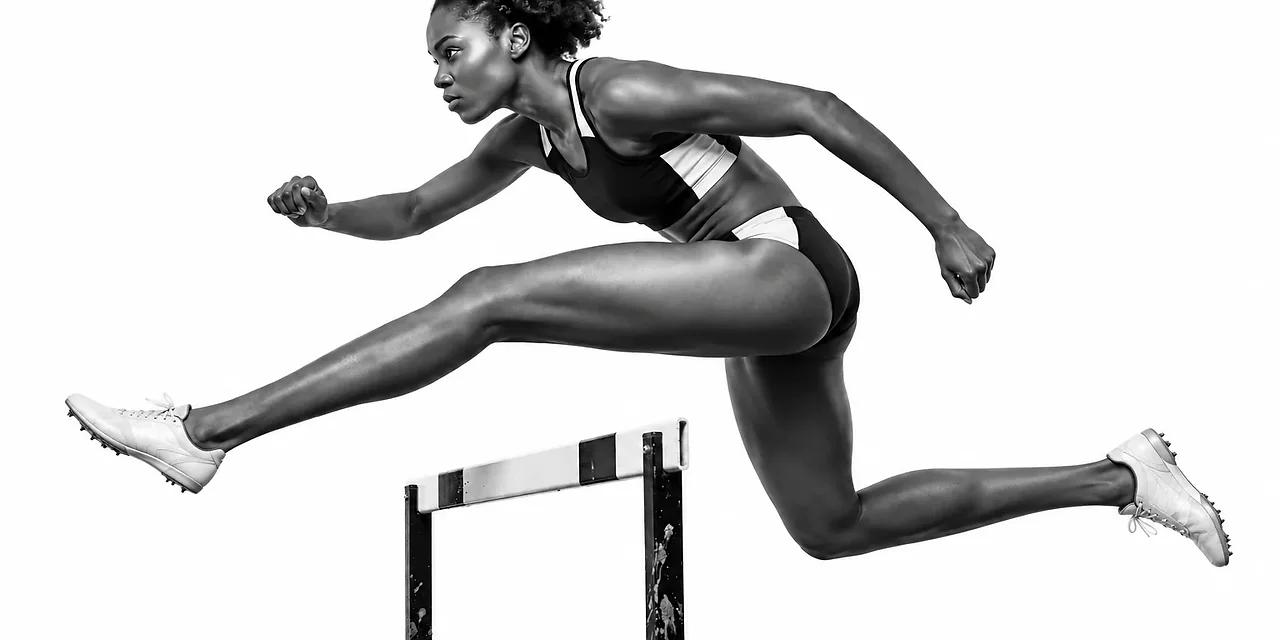
In 1990, Gail Devers could barely walk. Two years earlier she had run the hurdles at the Seoul Olympics. Now her feet were so swollen and blistered that she had to crawl or be carried.
Doctors had finally found the cause: Graves' disease, a thyroid disorder. But the radiation treatment meant to fix it was destroying her feet. Her doctors talked about amputating them. She later estimated she came within 48 hours of losing them. Then doctors changed her treatment, and within a month she was back on her feet. Soon after, she was back on the track.
In August 1992, less than 17 months after doctors nearly amputated her feet, Devers lined up for the Olympic 100-meter final in Barcelona. Five women hit the finish within six hundredths of a second. The photo showed Devers in front: gold, in 10.82 seconds.
Five days later she was leading the 100-meter hurdles final, her best event, by a wide margin. At the last hurdle her foot clipped the barrier, and she went down. All she could think, she said later, was "Crawl, crawl." She crawled across the line in fifth, a thousandth of a second out of fourth.
Four years later, in Atlanta, she won the Olympic 100 meters again.
That's the first thing sports teach, and maybe the biggest: what happens to you matters less than what you do with it.
Ask a room full of former athletes what sports taught them, and you'll hear the same handful of answers. Here are the ones that last, and the true stories that prove them.
Why the field is such a good classroom
Sports squeeze a whole life into one season. You set goals, hit walls, lose in public, and get another shot next week. Few places teach that fast.
The lessons seem to stick. In a global survey of 400 women executives by EY and espnW, 94% had played sports, and 52% played in college. Many of them credited sport with the discipline and teamwork their careers ran on.
But here's what most people miss: just playing doesn't guarantee the lessons. When researchers interviewed 23 youth coaches, many believed life skills were simply a by-product of playing, and that transfer to the rest of life "just happens." Hold that thought. We'll come back to it.
Lesson 1: A setback is information, not a verdict
Devers is the perfect example. A diagnosis, a near-amputation, a fall at the last hurdle in front of the whole world. Any one of those could have ended the story. She treated each one as a chapter. As she put it years later, "In my race, there's 10 hurdles, but in life, there is always a hurdle."
Sports are packed with failure, which is exactly why they're such good teachers:
- A baseball player who fails seven times out of ten is a .300 hitter, and that's excellent.
- In the pole vault and high jump, the winner usually keeps raising the bar until they miss three times. Most days, even the champion goes home on a miss.
- Every athlete who ever got good got there by losing a lot first.
Athletes learn to look at a loss like a coach looks at game film: what happened, what can I fix, what do I try next? It's the same skill you need for a bad test grade, a lost job, or a business that doesn't take off.
Try this: After a loss or a bad day, ask three questions. What happened? What part could I control? What will I do differently next time?
Lesson 2: Finish what you start
Barcelona, 1992. British 400-meter runner Derek Redmond came into the Olympics in great shape. He ran the fastest time of the first round and won his quarterfinal. A medal looked possible.
In the semifinal, about 15 seconds in, his hamstring tore. He went down on the track. Officials came to help. He waved them off, got up, and started hopping toward the finish on one leg.
Then a man pushed past security and ran onto the track. It was his father, Jim. He told Derek he didn't have to do this. Derek said he was going to finish. So Jim put his son's arm over his shoulder, and they did it together, with 65,000 people on their feet.
Jim explained it simply afterward: "We started his career together and we were going to finish it together."
Because he had help, Derek was disqualified. The official record says he did not finish. It was the last 400-meter race of his career. Almost nobody remembers who won that heat. Millions remember Derek Redmond.
That's the lesson. You don't always control the result. You do control whether you quit. Finishing a hard season, a hard class or a hard job builds something no scoreboard can measure. And sometimes it takes someone who loves you to help you get there.
Lesson 3: Your opponent is not your enemy
April 26, 2008. Western Oregon was playing Central Washington in a college softball game with playoff hopes on the line. Sara Tucholsky, a 5-foot-2 senior, came up with two runners on. She had never hit a home run, in high school or college.
She crushed one over the center-field fence.
In all the excitement she missed first base. When she turned back to touch it, her knee gave out. She got back to the bag and couldn't go any farther. The rules said her teammates couldn't help her around the bases. If her coach sent in a runner, her home run would be scored as a single. Her coach was about to do it.
Then a voice came from the other team. Mallory Holtman, Central Washington's first baseman and her conference's all-time home run leader, asked the umpire if she could carry Sara around the bases. There was no rule against it.
So Holtman and shortstop Liz Wallace lifted Sara between them and carried her around the diamond, lowering her at every base so she could touch the bag. By home plate, the crowd was standing. Then Holtman and Wallace went back to their positions and tried to win the game.
They didn't. Western Oregon won 4–2, and the loss ended Central Washington's playoff hopes. All three players later won the 2008 ESPY for Best Moment.
The lesson: compete as hard as you can, and never forget the person across from you is a person. The best competitors play both ways at once.
The quick hits
Those three are the big ones. Here are a few more that former athletes carry for life:
- Show up when you don't feel like it. Nobody feels like 6 a.m. practice in February. You go anyway. That habit pays rent for the rest of your life.
- You can be nervous and still perform. Butterflies don't mean you're not ready. They mean it matters.
- Take coaching without taking it personally. "Your elbow is dropping" is not "you're a bad person." People who can hear feedback get better faster, everywhere.
- Every role matters. The kid on the bench who pushes the starters every day in practice is part of every win.
- Manage your time. Practice, homework, a job, a life. Athletes learn to fit it all in early.
- Win with class, lose with class. People remember how you acted more than the score.
- Your body is your equipment. Sleep, food and recovery aren't extras. They're the job.
For coaches and parents: lessons are taught, not caught
Remember those coaches who thought life lessons "just happen"? Researchers have a name for that: an implicit approach. The lesson is there, but nobody points at it. The alternative is explicit: the coach names the lesson and helps the athlete connect it to the rest of life. Research suggests the explicit approach makes it more likely the lesson carries over to school, work and home.
One research team laid out six levels, from simply running a well-structured team all the way to having athletes practice using their skills outside sport. You don't need a degree to climb that ladder. Four simple habits will do it:
- Name it in the moment. "That was resilience. You missed twice and stayed calm on the third."
- Ask the bridge question. "Where else in your life will you need that?" Let them answer.
- Hand them chances to lead. Warm-ups, team meetings, helping a younger athlete.
- Model it. Kids watch how you handle a bad call or a tough loss. That's the lesson they remember.
The real trophy
A sprinter who nearly lost her feet. A father running onto an Olympic track. A first baseman carrying her opponent home.
None of those moments decided a championship. All of them are still being talked about decades later.
That's the secret of sports. The scoreboard resets every game. Records fall. Trophies end up in boxes in the garage. But the kid who learned to bounce back, to finish, and to compete with a big heart keeps those lessons for life.
So play hard. And pay attention to what the game is teaching you. It's the one win you get to keep forever.
Sources
- Wikipedia: Gail Devers
- Encyclopedia.com: Devers, Gail (1966—)
- Britannica: Gail Devers
- Scroll.in: Gail Devers and the closest 100m final
- Wikipedia: Women's 100m hurdles at the 1992 Olympics
- Mitch Albom: Devers falls, and then the other glass slipper drops (1992)
- Olympedia: Gail Devers
- Wikipedia: Derek Redmond
- NBC Sports: Jim Redmond, who helped son Derek finish 1992 Olympic race, dies
- Bleacher Report: Jim Redmond dies at 81
- Spokesman-Review: CWU softball players give lift to injured rival (2008)
- TIME: Sara Tucholsky's home run (2008)
- Sermon archive retelling of the Tucholsky home run, citing coach Pam Knox
- Samwick (Dartmouth): Holtman, the conference home run leader, offers to help
- EY and espnW: Where will you find your next leader?
- Bean & Forneris (2017): Is life skill development a by-product of sport participation?
- Bean et al. (2018): The implicit/explicit continuum of life skills development and transfer
- Developing life skills through school sports coaching
Related articles
The Miler Who Matched My Bench Press: Why Middle-Distance Runners Should Lift
Distance runners aren’t weak. The research shows that heavy lifting makes 800 m–3200 m runners more economical, faster at the kick, and less likely to be injured.
Why Fueling Beats a Number on the Scale
How eating the "perfect" diet cost me 11 pounds of power in an Olympic year, and why sprinters, jumpers, and vaulters should fuel for power, not a number on the scale.
The question every masters athlete eventually asks
Weight loss, squats, deadlifts, running, supplements: which ones actually make an athlete over 40 faster, springier, and more athletic? We read the research, the coaches, the forums, and the record holders.