
How Pro Track Athletes Keep Training
Why elite track athletes chase a sport that pays so little.
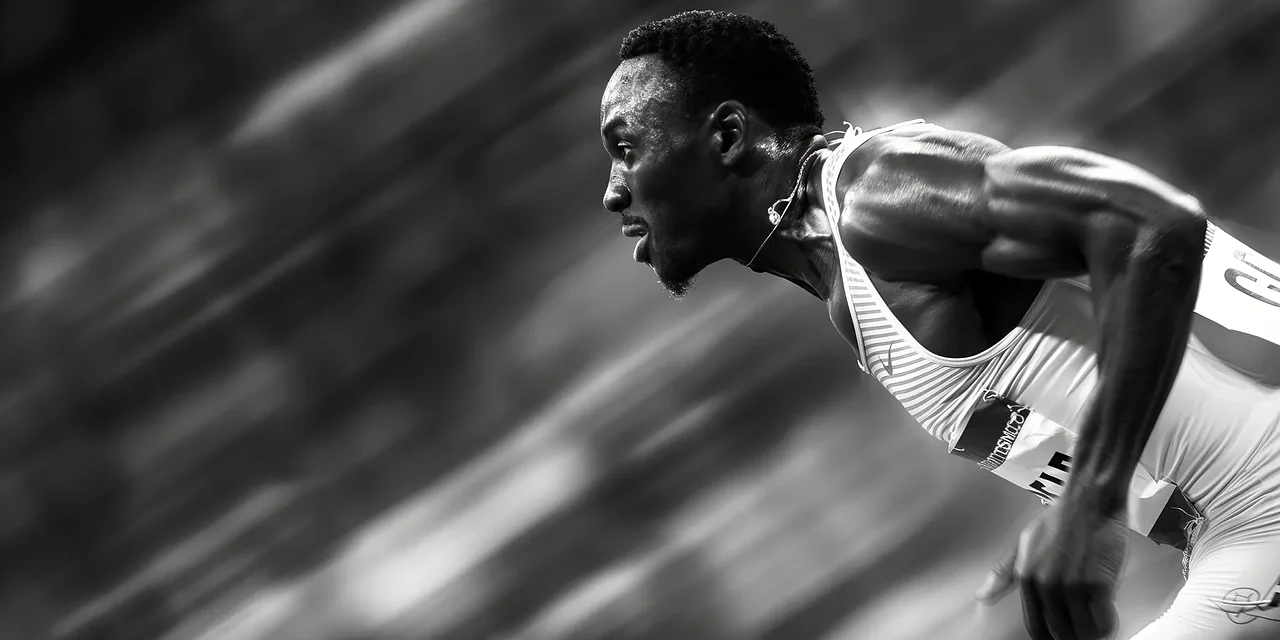
At 10:45 p.m., while most of Columbia, South Carolina, slept, Jacory Patterson clocked in at a UPS distribution center. Until nearly 5 a.m. he pulled boxes off a conveyor belt, couches and refrigerators included, and packed them into delivery trucks. On a good night he filled four.
Then he slept three hours. By about 8:30 a.m. he was training, and he kept at it until after lunch. He slept again, and went back to the trucks. His mother joked that the night shift was his second workout of the day.
Patterson wasn't a weekend jogger. He had won two NCAA relay titles at the University of Florida. But his times out of college weren't fast enough for a shoe contract, and when he went out in the first round of the 2024 Olympic Trials, nobody called. So he went home and got a job.
Less than a year later, at the 2025 U.S. Championships in Eugene, he ran one lap in 44.16 seconds and won the national 400-meter title. Some of the congratulations on his phone came from his old co-workers on the loading dock.
Patterson's story made headlines because it sounds unusual. In track and field, it isn't.
He isn't the exception
At those same championships, Dylan Beard made the U.S. team for the world championships in the 110m hurdles. To go, he had to ask for time off from his job at a Walmart deli in North Carolina.
The numbers back up what athletes already know. In 2024, a commission appointed by Congress surveyed about 1,000 U.S. athletes in the Olympic and Paralympic pipeline. 26.5% earned less than $15,000 a year. Most lost money competing, about $12,000 a year once travel and entry fees were paid.
Track has no league, no union and no salary. Its athletes are freelancers, stitching a living together from sponsors, appearance fees, prize money and grants. A decade ago, about half of U.S. athletes ranked top 10 nationally in their event made under $15,000 a year from the sport.
Which raises the obvious question.
So why do they do it?
Ask them, and the answer comes back in different words but the same shape. Patterson said that in all those nights on the trucks, he never once thought about quitting. He kept going, he said, "because this, it's in my heart."
That isn't just sentiment. When researchers asked elite track athletes why they stayed in the sport after school, love of the sport ranked first. They called it their first love.
But love is a big word. Spend enough years around athletes and you can see what it's actually made of:
- An honest scoreboard. Track is one of the few places in life where the result isn't an opinion. The clock, the tape, the bar: you cleared it or you didn't. A PR is proof you got better, and nobody can take it from you.
- Finding the edge. Most people never learn what their body and mind can really do. Elite athletes spend years finding out, a hundredth of a second or an inch at a time.
- A window that closes. Sprinters and jumpers peak in their twenties. A paycheck will still be there at 35. The chance to run 44 seconds won't.
- The people. Training partners who suffer through the same workouts. A coach who sees what you could be. A small world of people who understand why you'd load trucks all night.
- The jersey. Very few people ever get to stand on a line with USA across their chest.
- Who they become. Discipline, resilience, showing up when it's dark and cold. Those carry into every job after the last race.
Sport psychologists add an important wrinkle. Robert Vallerand's research separates harmonious passion, a love that fits within a full life, from obsessive passion, where an athlete's sense of worth depends on the sport. In a study of elite young athletes, harmonious passion was linked to less burnout; obsessive passion offered no such protection.
You can see it in athletes who last. Discus thrower Elena Bruckner took a full-time professional job while still competing, and wrote that having a career outside the sport let her love throwing again.
There's a hard flip side. When researchers interviewed talented junior athletes in the Caribbean who quit before reaching the senior level, lack of money and support weighed most in their decision. Love is why athletes start this life. Money is usually why they leave it.
How they pay for it: the shoe contract
Love gets an athlete out of bed. It doesn't pay rent. So they build a patchwork, and the piece everyone chases is a sponsor.
Patterson got his in June 2025. He announced a deal with Nike, put in his notice, and worked his last shift loading trucks the next day.
The range in those deals is enormous. A 2021 Runner's World report put a mid-career breakthrough contract at $50,000 to $100,000 a year, and less prominent runners at about $30,000 to $75,000. Many athletes fresh out of college get gear, coaching, and maybe a $10,000 to $12,000 stipend. Brands increasingly fund training groups rather than individuals, so signing often means moving cities and taking the coach that comes with the deal.
Then there's the fine print. Reduction clauses cut base pay for injury, missed performance marks, or not racing enough. Nike has typically required about 10 races a year. When it matched New Balance's offer to 800m runner Boris Berian in 2016, its terms could cut his base pay by 20 to 50 percent. A stress fracture can cost an athlete the season and a big piece of their income in the same year. That's pressure to come back too soon.
The safety net: grants for those near the top
There is no salary for representing the U.S. But a few organizations help athletes who are already close to the top.
Source | What it pays | Who gets it |
|---|---|---|
$30,000 or $40,000; $3.65 million to 100 athletes in 2025 | Athletes with a shot at a global medal | |
$15,000 each to 50 athletes in 2026 | Emerging and mid-career athletes, by application | |
$16 million in stipends to 1,565 athletes in 2022; insurance for 1,451 | Top athletes nominated by their national governing body, all sports | |
$37,500 gold, $22,500 silver, $15,000 bronze | Olympic and Paralympic medalists | |
$50,000 per gold, first paid in Paris 2024 | Olympic champions |
The USATF Foundation also offers maternity grants and has created a Jump to Glory Fund for vertical and horizontal jumpers, whose events offer limited competition and prize money. That one matters to anyone who coaches pole vault or high jump.
The catch: almost all of this goes to athletes who have already arrived. The athlete ranked 15th in the country, still climbing, is mostly on their own.
The day job: the sport's biggest unofficial sponsor
For everyone who hasn't signed yet, and many who have, the real sponsor is an employer: a UPS loading dock, a Walmart deli, an office that looks the other way when practice runs long.
The military. The Army's World Class Athlete Program lets soldiers draw regular pay while training full time for the Olympics. They are soldiers first, with Army duties alongside the training. In 2016, 11 soldiers went to the Rio Olympics, including 5,000m runner Paul Chelimo. The Air Force sent a pole vaulter, Cale Simmons.
Coaching and side businesses. Many pros coach, write training plans, run camps or build an online following. The work fits around two-a-day training, and they already have the skills.
New money, new risk
More money is coming into the sport. It isn't spread evenly, and it isn't always safe.
The Ultimate Championship. World Athletics held its first Ultimate Championship in Budapest on September 11–13, 2026. The purse was $10 million, with $150,000 to each event winner. It returns every two years.
Grand Slam Track. The 2025 league fronted by Michael Johnson promised six-figure paydays. It cancelled its final meet, fell behind on payments, and filed for Chapter 11 bankruptcy in December 2025. Filings showed about $40.7 million in debts. Olympic champions were among the creditors; Sydney McLaughlin-Levrone alone was owed $268,750.
Patterson felt that one personally. A wild-card entry to a Grand Slam Track meet in Florida helped make his breakthrough, and the race earned him $50,000, a career-changing sum for an athlete just off the night shift. Months later, it still hadn't been paid.
The Stevens awards. A $100 million gift from Ross Stevens now gives every U.S. Olympian and Paralympian $200,000 per Games, starting with Milan Cortina 2026. Half is paid at age 45 or 20 years after the Games, whichever is later. The other half is a benefit for their family. It's real security for later. It doesn't pay this year's rent.
The pattern is the same: prize money rewards a handful of athletes on one weekend. It doesn't fund the four years of training it takes to get there.
What this means for young athletes and their coaches
If you coach an athlete with a shot at the next level, the money talk is part of the job. Have it early, and have it honestly.
- Protect the love. The athletes who last love the sport without needing it to prove their worth. Help them build a life with more than one leg to stand on: school, friends, interests, a future outside the sport.
- Plan for income that doesn't depend on a sponsor. Most pros need one. A degree, a trade, or work that bends around training buys years in the sport.
- Read every word of a contract. Know what reductions, option years and race minimums mean before signing. A smaller deal with no reductions can be worth more than a bigger one with them.
- Apply for everything. Foundation grants are competitive, and athletes have to ask. Put the application windows on the calendar.
- Keep the record. Grant committees, sponsors and future coaching clients all ask the same thing: show me the results and the work behind them. An athlete who owns years of documented training has something to show. That's a big part of why we built AthleticPeak Pro around a record the athlete keeps.
Back to the loading dock
Patterson doesn't load trucks anymore, and he has said he wants to be known for more than that job. Fair enough. He earned the title on the track.
But those nights answer the question this whole story asks. Nobody pays you to pack four trucks before dawn and then go train. You do it because you have to know how fast you can be. The money in track is thin, and often unfair. The reason athletes chase it anyway is the oldest one in sport: to find out.
Sources
- r/trackandfield: 26.5% of US elite athletes make under $15k a year
- NBC News: National champion sprinter who worked a graveyard shift at UPS (2025)
- NBC Washington: Jacory Patterson and unpaid Grand Slam Track prize money (2025)
- KRDO: Olympic athletes live in poverty while executives get rich, federal report finds (2024)
- Sherwood News: How little being an Olympic hero on Team USA pays
- Forbes: The Olympic wealth gap (2021)
- Kwok (2002): Why elite track athletes in Singapore stay in or leave the sport
- Curran et al. (2011): Passion and burnout in elite junior athletes
- Elena Bruckner: My dual life as an athlete and professional
- Thomas et al. (2021): Why junior elite Caribbean track athletes drop out
- Ashley Mateo: Where is all the money in running?
- How much do pro runners make?
- Sportico: Nike contracts and race quotas (2020)
- Business of Fashion: Nike dispute highlights reduction clauses (2016)
- USATF Foundation: 2026 Elite Athlete Development Grants
- USATF Foundation: 2025 year in review
- USOPC 2022 Impact Report: financial summary
- Team USA: athlete financial resources and Operation Gold
- Planet Sport: Ultimate Championship prize pot and Paris prize money
- World Athletics: Ultimate Championship announcement
- U.S. Army: World Class Athlete Program
- NPR/KCUR: Army runners on the 2016 Olympic team
- The Sports Examiner: Grand Slam Track debt of $40.68 million
- AP via WSLS: World Athletics on Grand Slam Track (2026)
- NBC DFW: USOPC $100 million Stevens gift